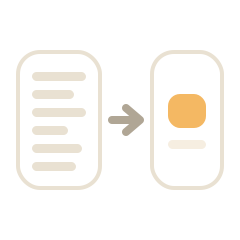
How do I switch from counting calories to just tracking protein?
Work out a protein target from your body weight, then log only protein. You stop logging every item and gain a log that takes seconds. Apple Health and Health Connect carry your protein history across, so the switch does not reset your data.
Key takeaways
- The switch is simple: you stop logging every item and start finishing your logs.
- Most people quit calorie counting because of the logging burden, not because the numbers were wrong.
- Protein history transfers through Apple Health or Health Connect, so switching does not start you at zero.
- Give it two weeks before judging. Week one always feels like less control, because it is.
- If you need to manage energy intake for a medical reason, do not switch.
Why people leave calorie counting
Almost never because it stopped working. Calorie counting is effective while it is happening, and the research on self-monitoring backs that up.
People leave because of the cost per entry. A full food diary needs every item, and the moment a day goes unlogged the total is wrong by an unknown amount, which makes the rest of that day feel pointless. Enough of those and the app goes unopened.
Protein tracking removes that failure mode. Each entry stands alone, so a meal you estimated or a meal you missed does not invalidate the others.
What changes, and what stays
The switch is lighter than it sounds, because the number you were watching comes with you.
You stop:
- Entering every item, every field, every day.
- Losing a whole day's total to one meal you did not log.
You keep:
- Whether you hit your protein target, which is the thing most people were watching anyway.
- Your protein history, through Apple Health or Health Connect.
- Weight trend, if you keep weighing yourself, which you should.
- Calories, carbs, fat and fibre, if you still want them. In Protein Buddy they are one setting away, and protein always comes first.
You gain:
- Logs that take seconds, so they get finished.
- A number you can act on at 4pm without opening a spreadsheet.
If you manage energy intake for a medical reason, keep the full record your clinician asks for. For everyone else, one number is the lighter habit that lasts.
Bringing your history with you
This is the part people assume is impossible, and it mostly is not.
Both Apple Health and Health Connect store dietary protein as a standard data type. If your previous app wrote to Health, and most do, your protein history is already sitting there independent of that app. A new tracker with read permission picks it up, so your charts and averages work from day one instead of starting empty.
Recipes and saved meals live inside the old app rather than in Health, so export those before you delete it if you want them.
The setup, and the one permission that fails silently, is covered in syncing protein with Apple Health.
- Export your recipes and saved meals. They live in the old app, not in Health.
- Check the old app is writing dietary protein to Apple Health or Health Connect, so the history survives it.
- Write down your current target and which recommendation it came from, so the new number has something to be judged against.
- Take a weight reading, so the scale trend has a starting point as your feedback loop.
- Keep the old app installed for two weeks. It costs nothing and removes the pressure to be certain immediately.
The switch, in order
1. Get a target first. Without one you are logging a number with nothing to compare it to. Body weight in kilograms times a rate: 1.2 g/kg for most adults, 1.5 or more when losing fat, 1.6 on a GLP-1 medication. Protein Buddy does it for you from a short quiz.
2. Connect Health before you log anything, so your history imports and today is not the first day.
3. Do not delete the old app for two weeks. Costs nothing, and removes the pressure to be certain immediately.
4. Learn your five foods. Most protein comes from the same handful of items. Once you know them, logging is arithmetic. The reference numbers are here.
5. Keep weighing yourself. With calories off the daily list, the scale trend is your feedback loop. Weekly average, not daily.
Week one feels worse. That is expected.
The first few days feel like flying without instruments, because you have deliberately removed instruments. What you notice by the end of the second week is different: you logged every meal, including the Saturday you would previously have abandoned.
That is the whole trade. Less information per day, on far more days.
How to tell it worked
After a month, three questions:
- Did you log more days than you did before? If not, the switch has not helped and the problem was not the logging burden.
- Is your protein higher? Most people find it is, because they were under-eating protein without a number in front of them.
- Is your weight trend still going where you want? If it has drifted and that matters, you have information to act on.
If the answer to all three is yes, the trade was worth it. If the answer to the first is no, go back: there is no prize for using the lighter tool.
Protein Buddy is built for exactly this switch. Two-way Health sync so your history comes with you, four ways to log, and no account required to start.
More questions about Tracking and apps
Will I gain weight if I stop counting calories?
Not automatically. Calorie counting works by making you aware of intake, and a lot of that awareness survives having done it. Many people also find protein rises and total intake falls slightly, since protein is the most satiating macronutrient. If your weight is the thing you are managing, keep weighing yourself and watch the trend rather than trusting either method blindly.
Can I move my food history to a protein tracker?
The protein part, yes. Apple Health and Health Connect both store dietary protein, so if your old app wrote to Health your protein history is already there and a new tracker can read it. Recipes and saved meals live inside the old app, so export those before you delete it.
How long before it feels normal?
Usually about two weeks. The first few days feel like a loss of control, because you genuinely have less information than before. What replaces it is finishing every log, including the days you would previously have given up on.
What if I want to go back?
Your protein history stays in Apple Health or Health Connect, so a full tracker can read it if you return. Nothing about the switch is one-way, which is a reasonable argument for trying it for a fortnight rather than deliberating.
Who should not switch?
Anyone managing energy intake for a medical reason, or in a supervised programme that requires a full diet record, should keep the record their clinician or programme asks for.