What are the cheapest sources of protein?
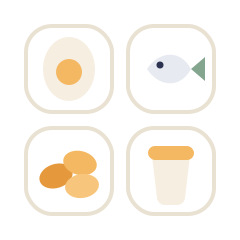
Eggs, dried legumes, tinned fish, milk, and own-brand whey do most of the work. The comparison that matters is cost per 20 g of protein rather than cost per kilo of food, because the second one flatters anything with a lot of water in it and hides how little protein some cheap foods carry.
Key takeaways
- Compare cost per 20 g of protein, not per kilo of food. Water is heavy and free.
- Dried legumes, eggs, milk and tinned fish are consistently at the cheap end anywhere in the world.
- Dried beans and lentils cost a fraction of tinned, and the price gap is mostly water and a tin.
- Chicken thigh and mince deliver similar protein to premium cuts for noticeably less.
- Own-brand whey is usually among the cheapest protein per gram in the shop, which surprises people.
Protein is the expensive macronutrient. Carbohydrate and fat are cheap almost everywhere; protein is where a food budget goes. So it is worth knowing which foods deliver it efficiently, and which ones only look like they do.
Compare per 20 g, not per kilo
The usual mistake is comparing prices per kilo of food. That measure rewards whatever holds the most water, which is why a bag of chicken looks expensive next to a tub of yoghurt that carries a fifth of the protein.
The comparison that answers the question is cost per 20 g of protein, which is roughly the amount a meal needs from its main source.
| Protein per 100 g | How much for about 20 g | |
|---|---|---|
| Dried lentils and beans | 24 g dry, 9 g cooked | 85 g dry, which is a large cooked portion |
| Eggs | 13 g | 3 to 4 large eggs |
| Milk | 3.5 g | 570 ml, about a pint |
| Tinned fish | 25 g | 80 g, most of a tin |
| Own-brand whey | 75 g | 27 g, most of a scoop |
| Chicken thigh | 25 g cooked | 80 g cooked |
| Beef mince | 24 g cooked | 85 g cooked |
| Greek yoghurt | 10 g | 200 g |
| Chicken breast | 31 g cooked | 65 g cooked |
| Steak, salmon, prawns | 25 to 26 g cooked | 80 g cooked, at several times the price |
The four swaps that do most of it
Not new meals. The same dinner with a different item in it.
- Dried legumes instead of tinned. The price difference is several-fold, and most of what you are paying for in a tin is water and steel. Cook a big batch and freeze it in portions.
- Thigh instead of breast. About 25 g per 100 g cooked against 31 g, at a large discount. The full chicken numbers show the trade.
- Mince instead of steak. Nearly the same protein per 100 g, a fraction of the price.
- Own-brand instead of branded. Particularly for dairy and whey, where the product is close to identical and the packaging is not.
Where the money quietly goes
Protein bars and ready-made shakes. These are among the most expensive protein per gram in any shop, often several times the cost of the same protein as powder. They are buying convenience, and it is worth knowing the price of that.
Anything with a health claim on the front. A "high protein" label is a legally defined ratio and not a promise about the amount. Reading the panel on the back frequently reveals a modest amount at a premium price.
Premium cuts and premium fish. Salmon, steak and prawns carry roughly the same protein per 100 g as tinned fish and mince. You may want them for other reasons, and you are not buying protein.
The plant-based case
Legumes are the cheapest protein there is, and reaching a full daily target from them takes a lot of volume: about 335 g of cooked lentils for 30 g of protein, which is why a cheap 150 g day pairs beans and lentils with eggs, milk and canned tuna. That is the trade at the centre of plant-based protein, and on a budget it works in your favour rather than against it.
Two things worth adding on cost. Tofu is usually inexpensive and much more protein-dense than legumes. And plant proteins score lower on quality measures, which is a reason to aim slightly higher on total intake rather than a reason to spend more.2
The one that surprises people
Basic own-brand whey is often cheaper per gram of protein than chicken breast, Greek yoghurt or eggs.
That does not make it a better food. It brings no fibre, few micronutrients and little fullness, so it is a poor substitute for a meal and a good way to close a gap. If protein is expensive in your shop and your target is genuinely hard to reach, it is worth pricing rather than dismissing. Whether you need a powder at all is the question to answer first.
More questions about Protein in food
What is the cheapest protein food?
Dried legumes, almost everywhere. Dried lentils and beans deliver protein for a small fraction of what meat costs, and the trade is preparation time and volume. After those, eggs and milk are usually next, then tinned fish and own-brand whey.
Is protein powder cheaper than food?
Often, per gram of protein. A basic own-brand whey usually beats chicken breast and most dairy on cost per 20 g. It does not replace meals, since it brings no fibre and little fullness, but as a way of closing a gap cheaply it competes better than its reputation suggests.
How do I eat more protein without spending more?
Change the cuts rather than the meals. Thigh instead of breast, mince instead of steak, dried instead of tinned legumes, own-brand instead of branded dairy. Those four swaps typically cut the protein part of a shop substantially without changing what anyone actually eats.