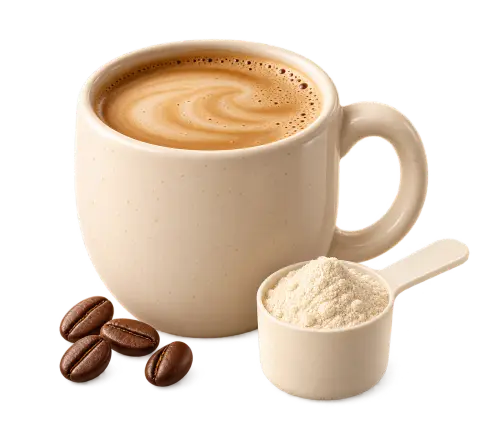
How do you make protein coffee?
Mix one scoop of protein powder with a small amount of cool milk or water until smooth, then gradually whisk in 8 fl oz of coffee. This keeps hot coffee from turning the powder into lumps. The protein comes from the scoop, usually 20 to 30 g according to its label; brewed coffee itself contributes almost none.
Key takeaways
- The reliable method is to make a smooth paste with protein powder and cool liquid before adding hot coffee.
- One scoop usually adds 20 to 30 g of protein, but the number on your powder's label is the one that counts.
- An 8 fl oz cup of brewed coffee contains about 95 mg of caffeine, though the amount varies by bean and brewing method.
- Protein coffee can repair a coffee-only morning, but it is still a drink and does not bring the fibre or fullness of a meal.
- Coffee does not make the protein more effective, and protein does not cancel the caffeine. They simply share a cup.
Protein coffee, often called proffee, is ordinary coffee with a useful amount of protein mixed into it. That is the whole idea. It is not a new kind of protein, and the coffee does not make the scoop work differently.
Its best case is simple: your morning was going to be coffee and no food. Adding a scoop turns almost no protein into roughly one meal-sized dose in the same minute.
The hot protein coffee recipe
You need:
- 1 scoop protein powder, enough for 20 to 30 g protein according to the label
- 2 to 4 tablespoons cool milk or water
- 8 fl oz freshly brewed coffee
- Cinnamon or another unsweetened flavouring, optional
Make it:
- Put the powder in a large mug or small jug.
- Add the cool milk or water a tablespoon at a time and stir until it becomes a smooth paste.
- Pour in a small splash of coffee and whisk again.
- Add the rest of the coffee gradually while stirring.
The paste is the important part. A dry scoop hitting a mug of hot liquid hydrates unevenly, leaving wet clumps with dry powder trapped inside. Starting cool gives every particle time to disperse.
- Make a paste
- Temper it
- Fill the cup
An inexpensive handheld frother makes the texture smoother, but it is not required. If you use a sealed blender, let the coffee cool first. Hot liquid creates pressure and does not belong in a closed shaker bottle.
The iced version
Iced protein coffee is harder to get wrong.
- Shake or blend one scoop with 4 fl oz of cold milk or water.
- Fill a glass with ice.
- Add 8 fl oz chilled coffee or cold brew.
- Pour in the protein mixture and stir.
A bottled protein shake works too: use it as the milk in an iced coffee. Read its label rather than assuming the whole bottle is one serving.
Which protein powder works best
The best powder is the one you already tolerate and like. Coffee exposes unpleasant aftertastes, so a powder that is acceptable in a fruit smoothie can be distracting here.
| Type | What happens in coffee | Best use |
|---|---|---|
| Whey concentrate or isolate | Usually mixes smoothly; milk proteins suit a latte texture | Hot or iced coffee |
| Casein blend | Thicker and more pudding-like | Iced coffee or a larger latte |
| Soy or pea blend | Can taste earthier and may need a frother | Iced coffee with milk |
| Ready-to-drink shake | Smoothest and most predictable | Fast iced coffee |
| Collagen peptides | Dissolve easily, but are not nutritionally interchangeable with a complete protein powder | When collagen is the product you intentionally chose |
Vanilla and chocolate are the obvious flavours. Unflavoured powder gives you more control, but some products taste noticeably milky or bitter in black coffee. Whey, casein and plant protein explains the nutritional differences separately from the recipe.
How much protein and caffeine are in it
The arithmetic belongs to the ingredients, not the name.
| Protein | Caffeine | Calories | |
|---|---|---|---|
| Black coffee, 8 fl oz | Trace | About 95 mg | About 2 |
| One scoop protein powder | Usually 20 to 30 g | Usually none | Usually 100 to 150 |
| Protein coffee | Usually 20 to 30 g | About 95 mg | Usually 100 to 150 before milk or syrup |
USDA FoodData Central lists brewed black coffee as contributing almost no energy or protein.2 The FDA gives about 95 mg caffeine as a typical figure for an 8 fl oz cup, but coffee varies considerably by beans, portion and brewing method.1
For most adults, the FDA cites 400 mg of caffeine a day as an amount not generally associated with negative effects. Sensitivity varies. Anyone who is pregnant, takes medication or manages a medical condition should ask their doctor what limit applies to them. If caffeine causes palpitations, anxiety, an upset stomach or disrupted sleep, adding protein does not make those effects disappear.1
Does it count as breakfast?
It counts toward your protein total. Whether it counts as breakfast depends on what you need from breakfast.
A scoop can supply the protein that a coffee-only morning was missing. It still brings little or no fibre, and drinking calories is not the same experience as eating a meal. If you are hungry again quickly, keep the coffee and add fruit, oats or toast rather than adding a second scoop.
That distinction matters for weight loss too. Protein coffee can replace a low-protein drink or fill an empty morning. It does not create weight loss by itself, and syrups, cream and sweetened milk still count. The evidence for protein supplements concerns total protein intake, not a special effect from putting powder in coffee.3
For a fuller first meal, use this recipe alongside one of the high-protein breakfast options. If the real question is whether powder deserves a place in your kitchen at all, start with whether protein powder is worth it.
Anyone whose caffeine or protein intake is managed as part of medical care should check the combination with the clinician managing it.
More questions about Protein in food
Can you put protein powder in hot coffee?
Yes. Do not drop a dry scoop straight into very hot coffee. First stir the powder with two to four tablespoons of cool milk or water until smooth, then add the coffee gradually while whisking. The heat changes the protein's structure, as cooking does, but does not remove the protein.
How much protein is in protein coffee?
Almost all of it comes from the powder or ready-to-drink shake. One scoop commonly supplies 20 to 30 g, but serving sizes vary, so use the Nutrition Facts label. Black coffee contributes only a trace amount.
Is protein coffee good for weight loss?
It can be a convenient way to replace a coffee-only breakfast with protein, but it does not cause weight loss. Count what you add: milk, syrups and cream can turn the same coffee into a much larger drink. It works best when it closes a real protein gap rather than being added on top of an unchanged day.
Can I use a bottled protein shake instead of powder?
Yes. Pour chilled coffee over ice and add enough of the shake to reach the taste and protein amount you want. This is the easiest version because the protein is already dispersed, but the final nutrition depends entirely on that product's label.