
Weight loss
Protein while you are losing weight
Why a higher protein intake makes a calorie deficit easier to hold, what it does to hunger, and how much of the weight you lose comes off as muscle rather than fat.

13 articles
- How to eat more protein while eating lessSet a daily target first, then change what the protein arrives attached to rather than eating more food. Lean sources, fat-free dairy, and cutting the oil in cooking free up several hundred calories a day for the same meals. Most people find their whole shortfall is at breakfast, and logging each meal against the target shows what is left before dinner.
 Does eating more protein help you lose weight?Yes, though less dramatically than the promise. Across 24 trials, a higher protein intake during a calorie deficit produced about 0.8 kg more weight loss over roughly twelve weeks. The more useful finding is what was lost: more fat, and about 0.4 kg more fat-free mass retained. Protein changes the composition of weight loss more than its speed.
 Does protein burn fat?No. Digesting protein does cost more energy than digesting fat or carbohydrate, which is a real and measurable effect, and it operates on a small share of a small share of your daily energy use. Protein changes what you lose in a deficit rather than creating one, and no food burns fat on its own.
 High-protein recipes for weight loss: easy breakfasts, lunches and dinnersStart with recipes that provide at least 25 grams of protein in a realistic serving and make vegetables, beans or fruit part of the same meal. These twelve options cover breakfast, lunch, dinner, meal prep, soup, shakes and snacks without requiring specialist ingredients.
 Protein per calorie: which foods pay their wayEgg whites, white fish, prawns, chicken breast and fat-free Greek yoghurt lead: all deliver 17 to 25 g of protein per 100 calories. Cheese, nuts, nut butter and fatty meats fall to under 10 g per 100 calories, which makes them protein-containing foods rather than efficient protein sources.
 High-protein slow cooker recipes for weight lossChoose slow cooker meals built around lean chicken, turkey, beef, pork, tofu or lentils, then measure the calorie-dense additions. These nine recipes provide roughly 28 to 46 grams of protein per serving and are designed to work for batch cooking.
 Do protein shakes help you lose weight?As a tool for reaching a protein target on a restricted day, yes. As a weight-loss product, no: a shake has calories like anything else and adds them if it is not replacing something. Its real weakness in a deficit is that liquid calories are less filling than the same protein eaten as food.
 Does protein help with belly fat?Not directly, because no food removes fat from a chosen area. What protein changes is the composition of overall loss, and one randomised maintenance trial did find waist circumference falling by 1.2 cm in the higher protein group while rising in the control group. That is a whole-body effect showing up at the waist.
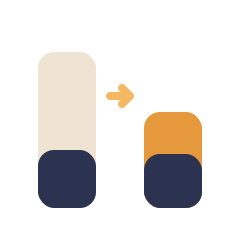 How to lose weight without losing muscleYou cannot avoid it entirely, only shift the ratio. Three levers do almost all of the work: keep the deficit moderate rather than aggressive, eat enough protein, and do resistance training. In trials, higher protein groups kept about 0.43 kg more fat-free mass over roughly twelve weeks.
 Keeping weight off, and what protein does about itThere is reasonable evidence that it helps. In a randomised trial, people who added 30 g of protein a day during six months of maintenance regained 0.8 kg against 3.0 kg in the control group, and their waist circumference fell rather than rose. It is a small old study and the most direct one available.
 Protein or a calorie deficit: which one is doing the work?The deficit, for losing weight at all. Protein does not create one. What protein decides is the composition of the loss: across 24 trials the higher protein groups lost about 0.87 kg more fat and kept about 0.43 kg more muscle, while total weight lost barely differed between groups.
 The scale stopped moving. Is protein the answer?Usually not directly. Most stalls under about three weeks are water and normal variation rather than a stop, and genuine ones are almost always an energy balance that has closed as your body got smaller. Protein matters here for a different reason: it decides whether the weight you already lost took muscle with it.
 You raised your protein and you are still hungryBecause the effect is real but modest, and it works within a meal rather than across a day. Trials show people report greater fullness after a higher protein meal, and the same trials do not show them eating less at the next one. Hunger in a deficit also has causes protein cannot touch.